
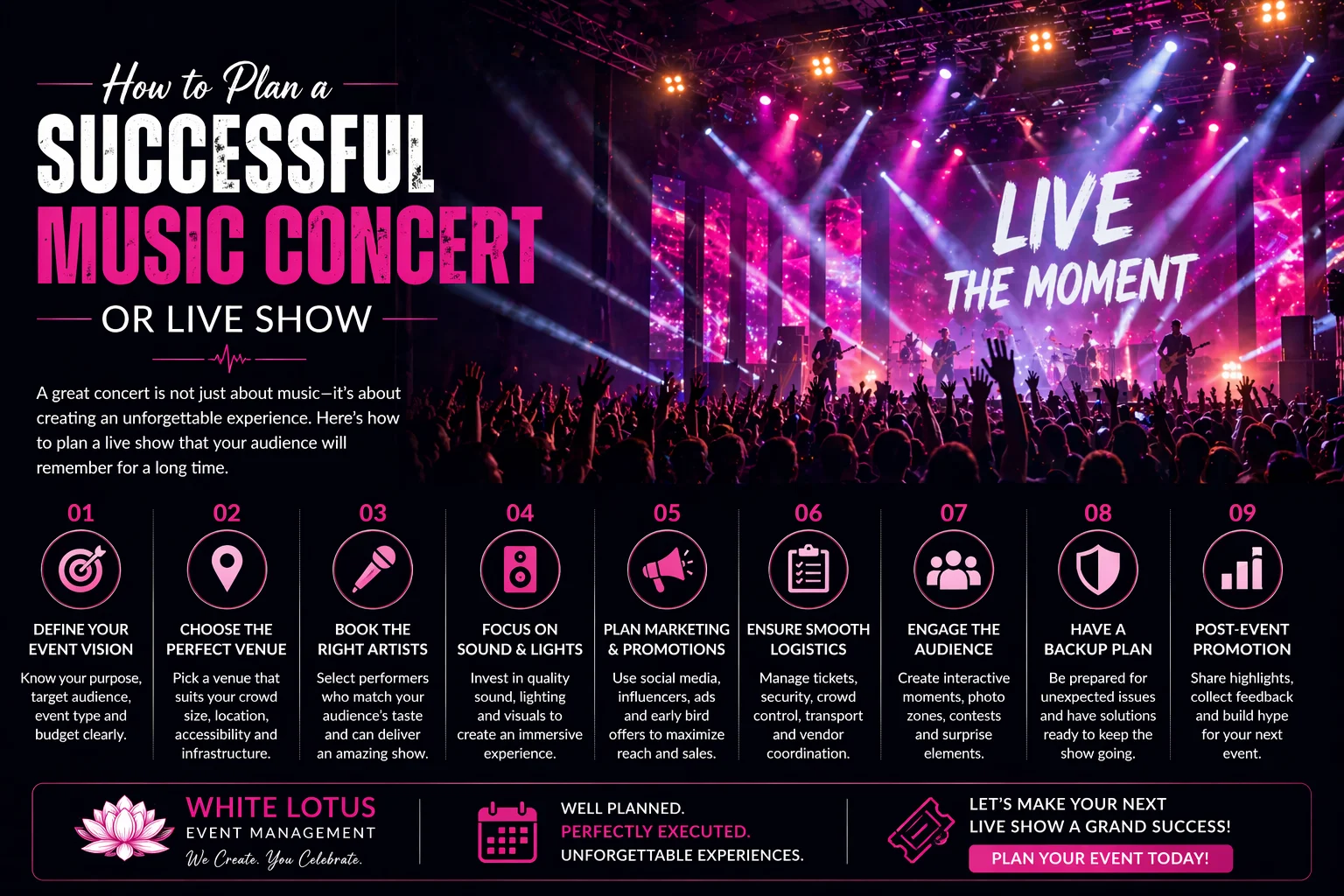
Introduction
Planning a music concert or live show is an exciting yet complex task that requires creativity, coordination, and precision. From selecting the right artists to managing logistics and audience experience, every detail plays a crucial role in making the event a success. With the right planning and professional execution, you can create an unforgettable experience for your audience.
1. Define Your Event Vision
Start with a clear concept:
- Type of concert (live band, DJ night, festival)
- Target audience
- Budget and scale
Having a strong vision helps in making all further decisions aligned and effective.
2. Choose the Perfect Venue
The venue sets the tone for your event. Consider:
- Capacity and crowd management
- Accessibility and location
- Sound and lighting infrastructure
An ideal venue enhances both performance and audience experience.
3. Book the Right Artists
Artists are the heart of any live show. Choose performers who:
- Match your audience’s taste
- Have strong stage presence
- Can engage the crowd
Well-known or trending artists can also boost ticket sales.
4. Focus on Sound & Lighting
High-quality sound and lighting are non-negotiable:
- Professional audio setup
- Stage lighting effects
- LED screens and visuals
These elements create an immersive atmosphere.
5. Plan Marketing & Promotions
Promote your event effectively using:
- Social media campaigns
- Influencer collaborations
- Posters and digital ads
- Early bird ticket offers
Good marketing ensures maximum reach and attendance.
6. Ensure Smooth Logistics
Behind every successful concert is strong backend planning:
- Ticketing system
- Security arrangements
- Crowd control
- Vendor coordination
Efficient logistics prevent chaos and ensure safety.
7. Engage the Audience
Make your event interactive and exciting:
- Live audience shoutouts
- Photo/video zones
- Merchandise stalls
- Surprise acts
Engagement keeps energy high throughout the event.
8. Have a Backup Plan
Always be prepared for unexpected situations:
- Weather issues (for outdoor events)
- Technical failures
- Artist delays
A backup plan ensures your event runs smoothly despite challenges.
9. Post-Event Promotion
The event doesn’t end when the show is over:
- Share highlights and reels
- Collect audience feedback
- Build hype for future events
This helps in building long-term brand value.
Conclusion
A successful music concert or live show is a blend of creativity, planning, and flawless execution. By focusing on every detail—from artist selection to audience engagement—you can create an electrifying experience that leaves a lasting impression.